A stiff key, loose handle or door that will not lock does not always mean the complete lock needs replacing.
Lock repair is usually worth considering when the problem is caused by alignment or one replaceable component and the rest of the mechanism remains reliable. Replacement may be the better option when several parts are worn, compatible components are unavailable, the lock has suffered serious damage or it no longer provides suitable security.
This guide explains how to narrow down the possible fault, which lock parts can be repaired separately and when replacement makes more sense. It also covers costs, safe checks and the questions to ask before approving the work.
Should You Repair or Replace Your Door Lock?
A door lock can often be repaired when the problem is limited to alignment, the handle, cylinder or another replaceable component. Replacing the lock usually makes more sense when several parts are worn, the damage affects its reliability or the existing lock no longer provides suitable security.
| Check | Repair may be suitable when | Replacement may be better when |
|---|---|---|
| Extent of the fault | One identifiable component is causing the problem | Several parts are damaged or heavily worn |
| Overall condition | The remaining lock is secure and operates reliably | The mechanism is old, unreliable or repeatedly failing |
| Replacement parts | A compatible component is readily available | The required parts are obsolete or difficult to source |
| Key security | All keys are accounted for | A key has been lost, stolen or may have been copied |
| Physical damage | The problem is caused by adjustment or minor wear | The lock has been damaged during a break-in or forced entry |
| Security level | The existing lock remains suitable for the door | The lock does not provide the level of security now required |
The visible symptom cannot always confirm which option is right. A stiff key, for example, could indicate a worn cylinder, an internal fault or pressure caused by poor door alignment. The next check helps separate problems with the lock itself from problems that occur when the door meets the frame.
Does Your Lock Work With the Door Open?
If it is safe to open the door, check whether the lock behaves differently when the door is open and when it is closed. This simple comparison will not diagnose the exact fault, but it can show whether the door alignment and frame should be investigated before any lock is replaced.
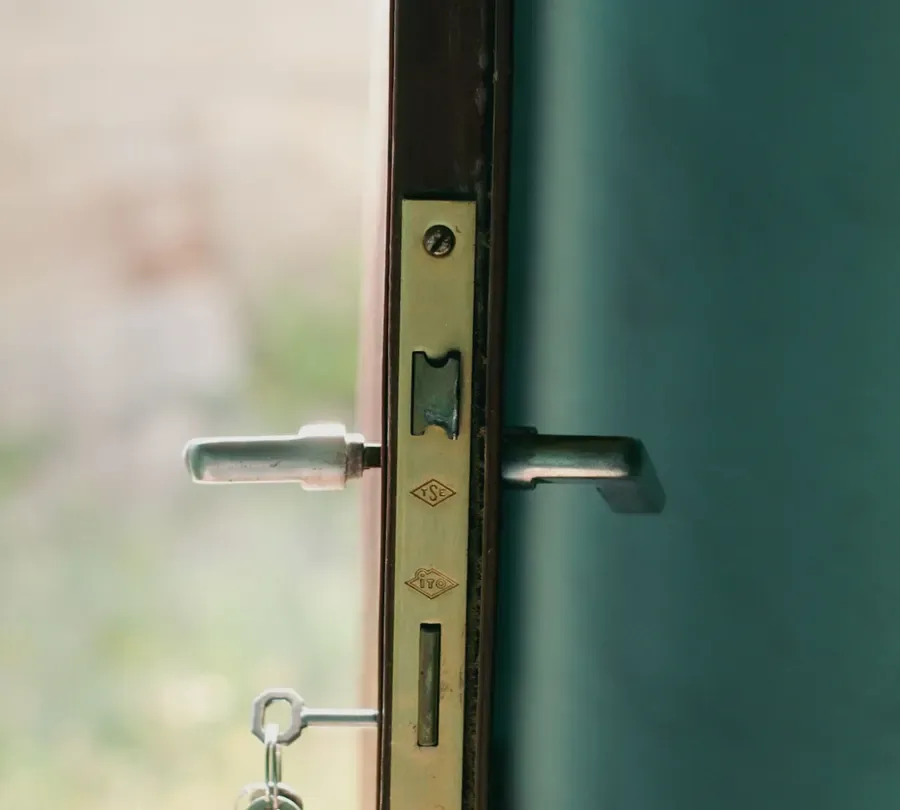
With the door open and under your control, gently check whether:
- The key enters and turns normally.
- The handle moves and returns to its usual position.
- The latch and bolt move without sticking.
- The hooks, rollers or bolts of a multipoint lock move normally.
Stop if the key, handle or mechanism requires force. Forcing a stiff component can turn a repairable problem into more extensive damage.
If the Lock Works When the Door Is Open
If the lock operates normally while the door is open but becomes stiff or difficult when the door closes, the problem may be caused by the way the door meets the frame.
Common causes include:
- A latch or bolt catching against the keep
- Loose or worn hinges
- A dropped or misaligned door
- Movement in the door or frame
- Pressure from seals or surrounding hardware
This result does not prove that the lock is undamaged. It means the alignment, hinges and frame hardware should be checked before deciding that the whole lock needs replacing. In many cases, correcting the alignment or adjusting the keep may restore normal operation without requiring a complete new lock.
If the Problem Continues With the Door Open
If the key, handle or locking mechanism remains stiff while the door is open, the fault is more likely to involve the lock or one of its related components.
Possible causes include:
- A worn key or damaged cylinder
- A fault inside the lock case
- Loose handles or a worn spindle
- A damaged multipoint gearbox or locking strip
- An obstructed or broken internal component
These symptoms help narrow down the possibilities, but the lock still needs to be inspected before choosing between repairing the affected lock component and replacing the lock.
If the Door Is Locked Shut
Do not drill, prise or repeatedly force the key or handle just to perform this check. Doing so could damage the lock, door or frame and make the work more expensive.
If the door cannot be opened safely, arrange help with getting back into the property so the cause can be assessed without unnecessary damage.
What Do Common Door Lock Problems Mean?
A lock problem can point towards the part that needs checking, but the symptom alone cannot confirm whether the lock should be repaired or replaced. The same stiff key or loose handle can have several causes, so avoid forcing the mechanism or buying replacement parts before the fault has been identified.
| Problem | What may need checking | What it could mean |
|---|---|---|
| The key turns but the lock does not operate | Cylinder connection, lock case or multipoint mechanism | A disconnected or failed component may be replaceable, but damage across the mechanism could require wider replacement |
| The key will not enter or turn | Key, keyway, cylinder or internal lock mechanism | The fault may be limited to a worn key or cylinder, although internal wear or an obstruction must be ruled out |
| The handle moves but the hooks or bolts do not engage | Handle, spindle, gearbox or multipoint locking strip | A handle or spindle may be changed separately, while gearbox or strip damage may require a more extensive repair |
| The handle droops or does not return | Fixings, handle spring, spindle, latch or gearbox | Loose or worn external parts may be replaceable, but internal resistance can indicate a fault within the lock case or gearbox |
| The lock repeatedly jams or becomes unreliable | Cylinder, lock case, gearbox, door alignment and general wear | Repair may be worthwhile when one fault can be isolated, but repeated failures can make replacement the more dependable option |
If you have a spare key, try it only when it enters naturally and turns without force. Do not continue pressing a stiff handle or add an unsuitable lubricant, as this can make the fault harder to assess.
The likely cause also depends on the locking system fitted to the door. Our guide to the main types of door locks can help you identify whether you have a cylinder, mortice lock or multipoint mechanism.
If the cause is still unclear, a lock repair assessment can establish which component has failed and whether repairing it is sensible.
Which Lock Parts Can Be Repaired or Replaced Separately?
What people call a lock repair often involves replacing one failed component while keeping the rest of the locking system. This can avoid changing the complete lock when the remaining parts are compatible, secure and still operating reliably.
Whether this is possible depends on the lock design, the condition of the other components and whether a suitable replacement part is available.
Cylinders, Handles and Frame Hardware
Several parts may be adjusted or replaced without changing the complete locking system:
- Cylinder: This is the part into which the key is inserted. A worn, damaged or unsuitable cylinder can often be replaced while retaining the surrounding lock mechanism.
- Handles and spindle: The handles and the square spindle connecting them may be changed when the fault is limited to these parts.
- Latch: A faulty latch may sometimes be replaced, although on many designs it forms part of the lock case and cannot be changed independently.
- Keeps: The frame fittings that receive the latch, bolt, hooks or rollers may need adjustment or replacement when the locking points no longer align correctly.
The condition of the surrounding mechanism still matters. Replacing a cylinder or handle will not solve the problem if the lock case, gearbox or door alignment is causing the fault.
Mortice Lock Cases
A mortice lock case sits inside the edge of a timber door. If its internal mechanism is worn or damaged, the case may be replaced while compatible handles and other door furniture remain in place.
The replacement case must match the existing door preparation and be suitable for how the door is used. Older or less common locks may need to be identified carefully because dimensions, key operation and security features can differ.
If a compatible case cannot be found, or the surrounding door preparation is damaged, a wider replacement may be required.
Multipoint Gearboxes and Locking Strips
A multipoint lock normally uses a central gearbox to control the hooks, rollers or bolts positioned along the edge of a uPVC or composite door. The gearbox and the full locking strip are related parts, but they do not always need to be replaced together.
A compatible gearbox can sometimes be fitted while the existing strip and locking points remain. The complete multipoint strip may be needed when:
- A suitable gearbox is unavailable
- The hooks, rollers or bolts are also damaged
- Several parts of the mechanism are heavily worn
- The strip has become bent or unreliable
- The replacement gearbox would not be compatible with the existing system
Correct identification is important because multipoint systems vary by manufacturer, measurements and design. More information about these mechanisms is available in our guide to uPVC and composite door lock problems.
The right option depends on which part has failed, whether a compatible component is available and whether the remaining mechanism is still reliable. If several components are worn or the existing lock is no longer suitable for the door, replacing the wider locking system may provide a more dependable result.
Lock Repair in Birmingham
Not Sure Whether to Repair or Replace?
Tell us what the key, handle and door are doing and whether the property can still be secured. We can help identify the likely fault before any work is agreed.
When Is Replacing a Door Lock Better Than Repairing It?
Repair is often worthwhile when one identifiable component has failed and the rest of the locking system remains reliable. Replacement may be the better choice when key security is uncertain, damage extends beyond one component, suitable parts are unavailable or the existing lock is no longer appropriate for the door.
After a Lost or Stolen Key
A lock can continue to work normally even when there is uncertainty about who may have a key. Repairing the mechanism will not prevent an existing key from opening it, so restoring control over access becomes the main concern.
Consider:
- Whether the key could be connected to your address
- Whether identifying information was lost with it
- Who may previously have held a copy
- Whether other unaccounted-for copies could exist
- The security needs of the property
A lost key does not automatically mean that the whole lock must be replaced. With some compatible locks, rekeying changes which key operates the existing hardware. In other cases, replacing the cylinder provides a new set of keys while the surrounding lock mechanism remains in place.
The suitable option depends on the type and condition of the lock. If a new cylinder is being considered, our guide to anti-snap locks explains how security cylinders differ from standard alternatives.
After Forced Entry or Impact Damage
A lock may still turn after a break-in attempt or a heavy impact, but that does not confirm that the entrance remains secure. Damage can affect the cylinder, lock case, gearbox, handles, fixings, door or frame.
The complete entrance should be checked for:
- Cracks, movement or distortion around the lock
- Loose handles, cylinders or fixings
- Damage to the lock case or multipoint mechanism
- Bent or misaligned hooks, bolts and keeps
- Splitting or weakening of the door or frame
- Changes in how the door closes and locks
Replacement may be more appropriate when the damage has reduced the strength, alignment or reliability of the locking system. Replacing only the most visible component could leave less obvious damage unresolved.
If you may make an insurance claim, photograph visible damage before work begins when it is safe to do so. Keep the invoice and ask for the completed work and replaced parts to be itemised. For urgent assistance, you can arrange repairs following a break-in.
When Parts Are Unavailable or Problems Keep Returning
Repair becomes less practical when the required component is obsolete, incompatible or difficult to source. This is more likely with older, unusual or discontinued locking systems.
Replacement may also be worth considering when:
- Several components are worn at the same time
- The same fault returns after previous work
- One repair is likely to expose another weak component
- The mechanism has become increasingly unreliable
- The cost of restoring several parts approaches the cost of a suitable replacement
A previous repair does not automatically mean that the lock now needs replacing. The important question is whether another repair is likely to restore dependable operation or merely delay a wider failure.
When the Existing Lock Is No Longer Suitable
Repairing a lock restores the existing type and specification. It does not upgrade a lock that is unsuitable for the door, no longer meets the property’s security needs or falls short of a specific insurance requirement.
Replacement may be more appropriate when:
- The property’s security needs have changed
- The existing lock is unsuitable for the entrance
- A stronger or more appropriate lock specification is required
- An insurer names a particular requirement in the policy
- Keeping the current lock would leave an avoidable security weakness
There is no single lock requirement that applies to every door, property or insurance policy. Check your own policy wording and ask what type and specification of lock is being proposed before approving replacement.
A lock can therefore be mechanically repairable without being the right lock to retain. The final decision should consider key control, damage, reliability, parts availability, security requirements and the likely value of repairing the existing system.
What Affects the Cost of Repairing or Replacing a Door Lock?
The cost of repairing or replacing a door lock depends mainly on the failed component, the type of lock, the parts required and whether the door or frame also needs attention. A useful quote should explain what will be adjusted, repaired or replaced rather than describing every job simply as a lock change.
The Main Cost Factors
Several details can affect the total:
- The fault and work required: Adjusting a keep, replacing a cylinder and changing a complete multipoint mechanism involve very different amounts of work.
- Lock type and specification: Cylinders, mortice lock cases, nightlatches and multipoint components vary in design, quality and security specification.
- Parts availability: Older or less common components may take longer to identify or source. Wider replacement may be needed when a compatible part is unavailable.
- Condition of the complete system: Replacing one part may not be enough when the surrounding mechanism is also worn or damaged.
- Door and frame condition: Dropped doors, damaged keeps, loose hinges and impact damage may require additional work beyond the lock itself.
- Time of attendance: Labour charges may be higher during evenings, overnight periods, weekends or bank holidays.
- What the price includes: Parts, labour, replacement keys, VAT and any attendance charge should be considered when comparing totals.
When requesting a price, explain what the door is made from, whether it is open or locked shut and whether the property can currently be secured. These details help clarify the likely work, although the final solution may depend on what is found on inspection.
Compare the Work Included, Not Just the Total
Two quotes can cover different components, specifications and amounts of work even when both are described as lock repair or replacement.
Before comparing them, ask:
- What component will be repaired or replaced?
- Why is that work being recommended?
- What parts and how many replacement keys are included?
- Does the total include labour, VAT and any attendance charge?
- Is the price based on your description or confirmed after inspection?
- What could cause the price to change?
- Will any revised work and cost be explained before it begins?
A cylinder change and a complete multipoint mechanism replacement are different services, so their prices should not be compared as though they cover the same work.
For typical local cost ranges and the additional charges worth asking about, see our Birmingham locksmith price guide.
Can You Repair or Replace a Door Lock Yourself?
You can make a few basic checks yourself, but dismantling or replacing a lock requires the correct part, measurements and installation. A mistake can leave the door difficult to operate or unable to secure.
Only inspect a lock when you own the property or have permission, the door can remain safely open during the check and no part of the mechanism requires force.
Checks You Can Make Safely
Before buying or removing any component, you can:
- Try an undamaged spare key if it enters naturally.
- Check for visibly loose handles or fixings.
- Note whether the door can still close and lock.
- Record the lock brand and any visible markings.
- Photograph the handles, faceplate and edge of the door.
- Check whether the property can currently be secured.
These observations can help describe the problem, but they cannot confirm which internal component has failed.
If you are considering doing the work yourself, first read our guide explaining how to replace a door lock. It will help you understand the measurements and compatibility checks involved before anything is removed.
When DIY Lock Replacement Can Go Wrong
A cylinder or handle may appear simple to change, but the replacement must match the door and surrounding mechanism. Incorrect measurements, incompatible parts or poor fitting can stop the lock from operating correctly.
Mortice lock cases require accurate sizing and alignment. Multipoint gearboxes and locking strips can be more difficult to identify because their measurements, manufacturers and locking-point arrangements vary.
Stop before dismantling the lock if:
- The door is locked shut.
- The property cannot currently be secured.
- The correct component has not been identified.
- The door, frame or locking points are damaged.
- Removing the part could leave the entrance unusable.
- You are uncertain about ownership, tenancy or building requirements.
Replacing the visible component will not solve the problem if the actual cause is door alignment, a damaged lock case or a fault elsewhere in a multipoint mechanism.
When to Stop and Get Professional Help
Professional help is sensible when the fault remains unclear, an internal mechanism may be damaged or the work affects the security of an external entrance.
If a key has snapped inside the lock, avoid pushing it further into the cylinder or repeatedly turning another key against it. Help with removing a broken key may prevent additional damage.
Extra care is also needed when the lock is fitted to a fire door, flat entrance or communal door. Lock hardware forms part of the complete door assembly, and unsuitable alterations can affect how the door performs. Current government fire-door guidance advises residents to report faults and obtain the knowledge and agreement of the responsible person before altering a flat entrance door.
If the door is part of a rented or managed building, check with the landlord, managing agent or responsible person before changing the lock or other door hardware.
Repair or Replace Your Door Lock?
Repair is usually worth considering when the problem involves door alignment or one replaceable component. Replacement may be more suitable when several parts are worn, the lock is badly damaged, compatible parts are unavailable or key security is uncertain.
Avoid forcing a stiff key or handle, as this can cause further damage. If you need help deciding, contact our Birmingham locksmith team with your door type, a description of the problem and whether the property can still be secured. Clear photographs may also help identify the locking system.
The proposed work and price should be explained before it begins. If an inspection reveals a different fault, ask for the revised work and total to be confirmed before proceeding.
Need a Locksmith in Birmingham?
Get the Fault Checked Before You Decide
Call with your door type and a description of the problem. We will explain whether a repair or replacement looks suitable and confirm the work and price before it begins.
Frequently Asked Questions About Lock Repair and Replacement
Can a locksmith repair a door lock without replacing it?
Yes, many door-lock problems can be repaired without replacing the complete lock. Alignment faults, loose handles, worn spindles, cylinders and some multipoint gearboxes may be dealt with separately when the remaining mechanism is secure and reliable.
Why does my lock work when the door is open but not when it is closed?
The door or locking points are likely to be misaligned if the lock works normally while open but becomes stiff when closed. The hinges, keeps, door position and frame should be checked before replacing the lock.
Should I repair or replace a stiff door lock?
Repair may be suitable when the stiffness comes from alignment or one replaceable component. Replacement may be better when several parts are worn, the mechanism is damaged or the same problem keeps returning. Do not force the key or handle while deciding.
Is it cheaper to repair or replace a door lock?
Repair is often less expensive when the problem is limited to adjustment or one component. Replacement may offer better value when several parts are worn, compatible components are unavailable or repairing one part would leave an unreliable mechanism.
Can a uPVC door-lock gearbox be replaced without changing the complete mechanism?
Yes, a compatible gearbox can sometimes be replaced while the existing multipoint locking strip remains in place. The complete strip may be needed if a matching gearbox is unavailable or the hooks, rollers and other locking points are also damaged.
Do I need to replace the lock if I lose a key?
Not always, but you should consider whether the key could be connected to your property or copied. Depending on the lock, rekeying or replacing the cylinder may prevent the missing key from working without changing the complete locking mechanism.
Is an old door lock worth repairing?
Yes, an older lock may be worth repairing if the fault is limited, compatible parts are available and the remaining mechanism is reliable. Replacement is usually more practical when several components are worn, parts are obsolete or the lock is no longer suitable for the door.
Can lubricant fix a stiff door lock?
Lubricant may help only when the lock requires routine maintenance and the correct product is used. It will not correct door misalignment, worn components or internal damage. Follow the lock manufacturer’s guidance rather than applying oil or a general-purpose spray.
Can a repaired lock be as reliable as it was before?
Yes, a properly completed repair can restore reliable operation when the correct fault is identified and suitable components are used. Reliability also depends on the condition of the remaining mechanism, the door alignment and whether the completed lock is tested correctly.
Who should arrange a lock repair in a rented property?
Report the problem to your landlord or managing agent before arranging changes yourself, especially if the entrance cannot be secured. Landlords are generally responsible for most repairs to doors and windows, but responsibility can depend on how the damage occurred and the tenancy agreement. Citizens Advice explains rented-property repair responsibilities.